How to Fix a Washing Machine That Won't Drain
Step-by-step guide to diagnose and fix drainage issues in your washing machine, from clogged filters to pump problems.
How to Fix a Washing Machine That Won't Drain? Most washer won't issues come down to a few common causes. Start by disconnect the power cord from the wall outlet. safety first.… Total fix takes 15–30 min.
| Difficulty | Easy |
| Time required | 15–30 min |
| Tools needed | 4 |
Video Tutorial
Tools Needed
Unplug the washer
Disconnect the power cord from the wall outlet. Safety first.
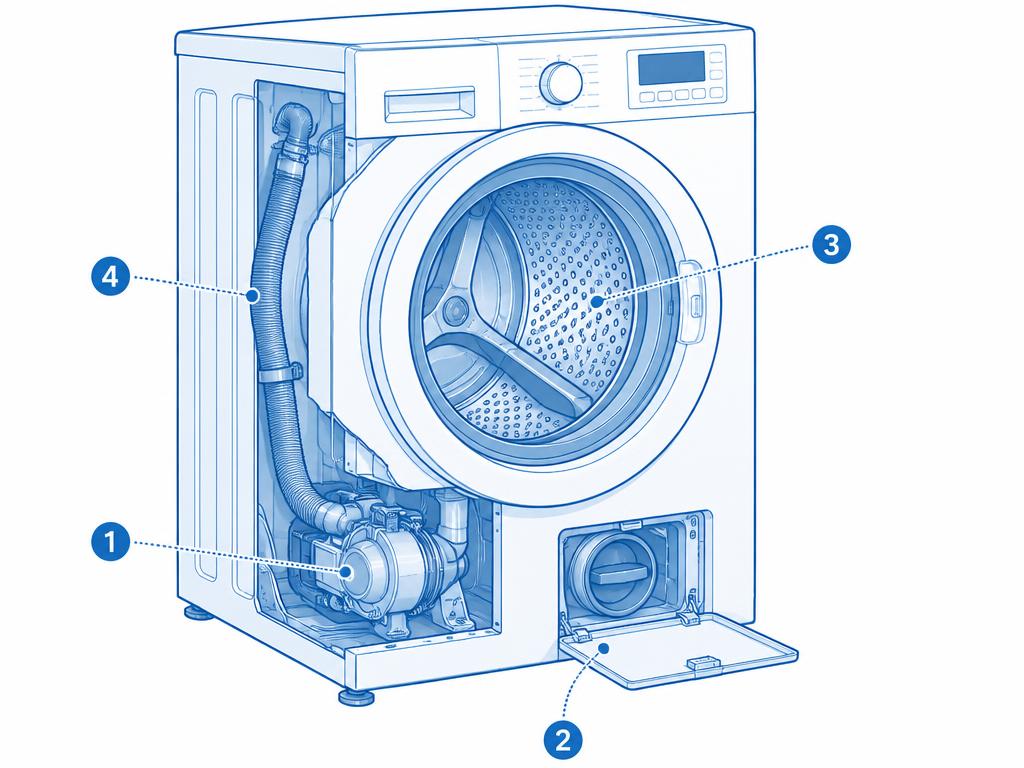
Locate the drain filter
Most front-loaders have a small access panel at the bottom front. Top-loaders may require removing the front panel.
Place towels and a pan
Water will come out when you open the filter. Place towels around the area and a shallow pan underneath.
Remove and clean the filter
Twist the filter counter-clockwise to remove it. Clear any debris, coins, lint, or small items caught in the filter.
Inspect the drain hose
Pull the washer away from the wall and check the drain hose for kinks, clogs, or damage. Straighten any bends.
Test the drain pump
With the filter reinstalled, plug in the washer and run a spin/drain cycle. Listen for the pump. If it hums but doesn't drain, the pump may need replacement.
Reassemble and test
Put everything back together, push the washer into place, and run a complete cycle to verify the fix.
Did this guide fix your problem?
Find Replacement Parts
Canadian retailers first
* Links open external Canadian retailers. AIRepairs may earn a small commission on qualifying purchases at no cost to you.
Frequently asked questions
How long does it take to fix a washing machine that won't drain?
Most DIYers complete this repair in 15–30 min. Difficulty: Easy.
What tools do I need?
You'll need: Towels, Shallow pan, Pliers, Flashlight.
Is this safe to do myself?
Never work on a plugged-in appliance.
When should I call a professional instead?
Call a pro if the problem persists after following all steps, if the repair involves gas, sealed refrigeration, or high-voltage components, or if your appliance is still under warranty.